Being there…

Throughout your life or career, have you noticed that some people are just…there…and you feel better for it?

Shortly after starting a new IT leadership position, more than 30 years ago, one of my skeptical employees had a serious crash and recovery of one of her mission critical applications. I hung out with her over the next 36 hours or so, just being there and helping, if asked, and we have been very close friends since.

Attended the funeral for a valued employee’s immediate family? Visited an employee in the hospital? Offered them a ride if their car isn’t working? Give them time off when they NEED the time to address a serious personal issue, or celebrate a significant family event?

Just being there is important. It’s noticed. It’s appreciated.

In my current Project Management role, I hung out with our systems engineers and others while troubleshooting a performance issue. It went into the evening. I gathered my things and returned to say good-night and say thanks, and the reply was “Thank you. We don’t normally get PMs who are willing to hang with us.”

It was worth the investment of a few hours. I learned some additional technical information, I bonded with a new band of brothers, and maybe earned some “cred” for when I need help down the road – personally or professionally.
Ever thought about your “legacy”?

Today, the warriors of the Denver Broncos face those of the Seattle Seahawks in Super Bowl XLVIII. One of the headlines reads, “Manning can cement his legacy”. Peyton Manning, at 37, is the owner of a highly respected and accomplished football career, which includes a Super Bowl victory in 2007.

At 37, and nearing the end of his storied career, Peyton is constantly being asked about his legacy. Peyton, known for his wit said, “I thought you had to be 70 to have a legacy. I’m not sure what the word even means.” Given some time to think about it, he finally responded to reporters with the following: “If I had my choice, what my legacy would be, would be that I played my butt off for every team that I ever played on, I was a really good teammate, and I did everything I could to win.”

How do you want to be remembered? What contributions did you make?

Personally, I want my legacy to reflect that I have always been a good person with respect to family, friends and community; hopefully, setting a good example for those following in my footsteps. Professionally, and in group situations, I want to be remembered for working my butt off for every team I ever played on, being a really good teammate, and doing everything I could to win.

Your “legacy” will live on in the hearts and minds of those you’ve touched in your lifetime. Thanks for the help, Peyton.

ps: The Denver Broncos lost the Super Bowl – badly. Many will continue to criticize Peyton Manning and his ability to win “the big one”, but I personally support Peyton’s character and accomplishment for getting to those important games.

Do you provide reviews for your Consultants?

On a purely business level, you probably do not need to provide a performance review for your Consultant(s), as their contract most likely protects you from suffering the consequences of an inadequate performer. The reward for a “meets” or “exceeds” performance expectations is that the Consultant is allowed to fulfill the term of the engagement, and may be invited back for another. There is also the potential for a recommendation, which is always appreciated.

I am currently in the 10th month of a Consulting engagement, and felt a slight pang as managers and their direct reports are going through the ritual of the annual reviews. Having lived in that culture for over 30 years, I found myself missing it.

This afternoon, my manager called me into his office for a chat.

  • I like the way you interact with people
  • All your internal clients have great things to say about you and want to work with you
  • Most of all, you make me look good

Simple and to the point. I like this review process.


It’s All About the Customer – well, it should be

Whether your Customer is external or internal, it “should” all be about the customer.

Do you remember that phrase, “If you don’t take care of your Customer, someone else will?” Do you believe it? I do.

Yet, I am still amazed at the number of establishments and businesses, that for whatever reason, do not embrace that philosophy. I am a regular Hertz Customer, largely because I always believed in their superior Customer Service – until recently. During a recent family vacation, In Orlando, we were about to pile into our rented van for a trip to see Mickey, and the battery in the key fob – the only access to the vehicle, died. Hertz’ solution to MY problem was less than satisfactory, at the time. Now, in my mind, Hertz has fallen in par with all the other rental companies.

The problem is probably more prevalent with service organizations within a company, where people don’t think of their fellow employees or internal departments as “Customers”. That attitude eventually catches up to them, in terms of corporate performance, departmental performance, individual performance, and continuation of a culture problem. Everyone loses.

Yes, I am a proponent of the Customer – notice that I capitalize Customer, all the time, to re-inforce that belief.

Zach Ertz – I like this kid

Who is Zach Ertz? He is the Eagles rookie tight end, who is physically talented, at 6’5″ and 250 pounds, good hands, good speed, and a super-fantastic attitude. He had 36 receptions during the regular season, averaging 13 yards per catch. Not shabby.

And, he has confidence. “I want to make Pro Bowls, do all the great things.” The quote I like most is this, “I think I can contribute to the team in a multitude of ways.” Why do I like that quote? Because it is the way I think of myself.

Have a super-fantastic day! Go Eagles!

The Coach and the Locker Room

The Miami Dolphins have recently been in the news for hazing allegations, which spells trouble in the locker room.

The Coach generally acknowledges responsibility for calling the right plays, putting his players in the right position to succeed, and winning. Granted. The implicit responsibility for understanding what is happening in the locker room is the issue at hand this week. And, yes, the Coach is responsible.

That is true of our IT Executives, too. As an executive or manager, you must be aware of what is going on around you, and responsible for what is going on under you. In sports, the term is keeping your head on a swivel. You can’t only pay attention to what is happening above you, but be aware of what is happening in your industry and among your peer executives, and translating that, effectively, into the strategy and tactical execution that your team must execute.

You must also be aware of what is going on within your team; including your direct reports AND their people. Are they properly trained and motivated? Are you doing everything possible to help them maintain an appropriate work/life balance? Do your people work well together and with peer organizations? You can’t keep a blind eye and succeed. Spend time walking the floor and talking to people above you, peers, and in your own locker room.

A win is a win is a win

Unfortunately, you can sometimes go for long periods of feeling that you are pushing that boulder up hill without attaining a feeling of satisfaction and accomplishment. It’s physically and emotionally draining.

SO, whenever you have a good day, or score what you might consider a win, no matter how small it may seem, take the opportunity to celebrate by patting yourself on the back, sharing the news with those around you, and thanking those that helped make it all possible. And don’t forget to advertise the win with those you got it for.

Oslo, Norway – September 23rd

We are participating in a 3 hour Maritime Highlights excursion today. Our guide was Ingar – and, legally, we had to wear our seat belts on the bus. No problem.

Oslo is home to 673,000 people. Norway has a population of only 5 million. The opera house opened in 2008, obviously modern, and is known as “the bar code building”. Why? Because when you look at it, it looks like a bar code! The Grand Hotel is known for where the Nobel Peace prize winners stay. Oslo is known for the Ice Bar, where everything is made of ice. We didn’t have an opportunity to see it, but those who did said it wasn’t worth it. The Oslo Marathon was run the day before we got there. It was a big local event. The US Embassy in Oslo is known as “Fort Knox”, and looks like it.

We stopped at the Viking Ship Museum, which was interesting. The museum is smallish and rural, and doesn’t really have much. However, when you consider that the pieces were recovered from archeological digs, including the complete Oseberg Ship, which dates back to 834 AD. A number of smaller relics of the period were also interesting.

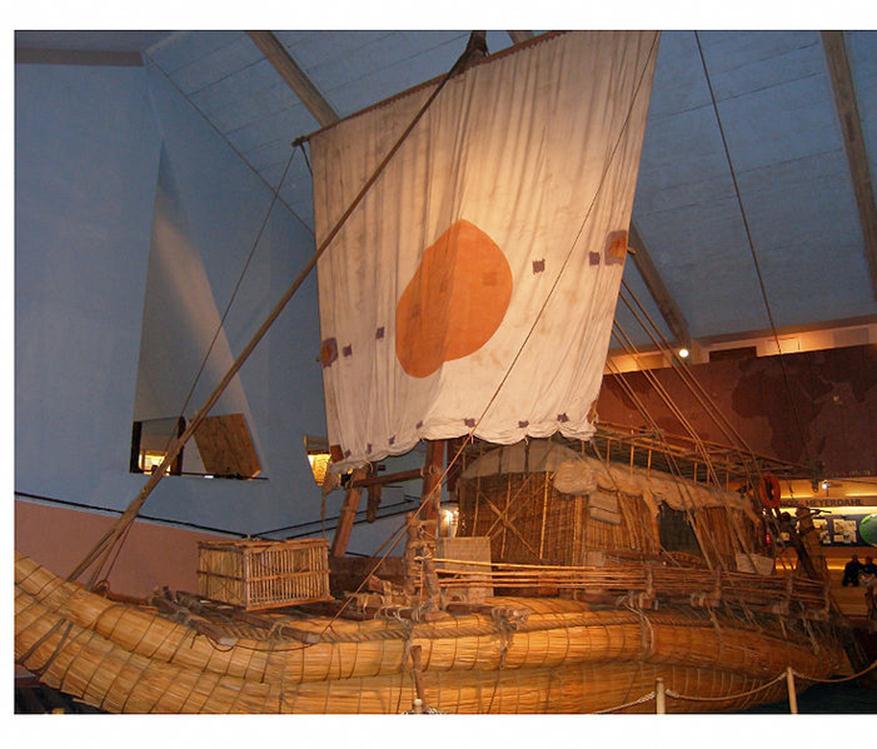
Practically right next door is the Kon-Tiki Museum. What?! Yes, the Kon-Tiki. Thor Heyerdahl wanted to prove that people from Peru could cross the Pacific Ocean to Polynesia, merely by riding currents. He built the period appropriate Kon-Tiki of balsa logs and it took his band of volunteers 101 days to make the trip in 1947. It was well documented, and a movie was made of the feat. The Kon-Tiki is housed in the museum. Not me! In 1969, the 45-foot Ra was built of Egyptian papyrus, and set sail on its 4,000 mile adventure across the Atlantic Ocean from Morocco, on the coast of Africa, and the Caribbean Islands….or almost. Again, not me!


The FRAM Polar Ship Museum is also located there. The FRAM, launched in 1893, “is the strongest wooden ship ever built and still holds the records for sailing farthest north and farthest south.” It’s an amazing story, really, when you think about the era and the conditions they faced.

Norway and its countryside were very pretty, and had a relaxing quality to it. It also sounds like it was pretty cold in the winter; accompanied by little daylight.

Bill O’Brien on the challenges of his sophomore season as coach of the Nittany Lions

“I know the players a lot better, I learned a lot about organization and how important it is to just basically state your philosophy, your goals, just about every day or every time you have a staff meeting. I’ve learned to communicate better, too.”

Philadelphia Inquirer, Sunday, August 25, 2013, page E11